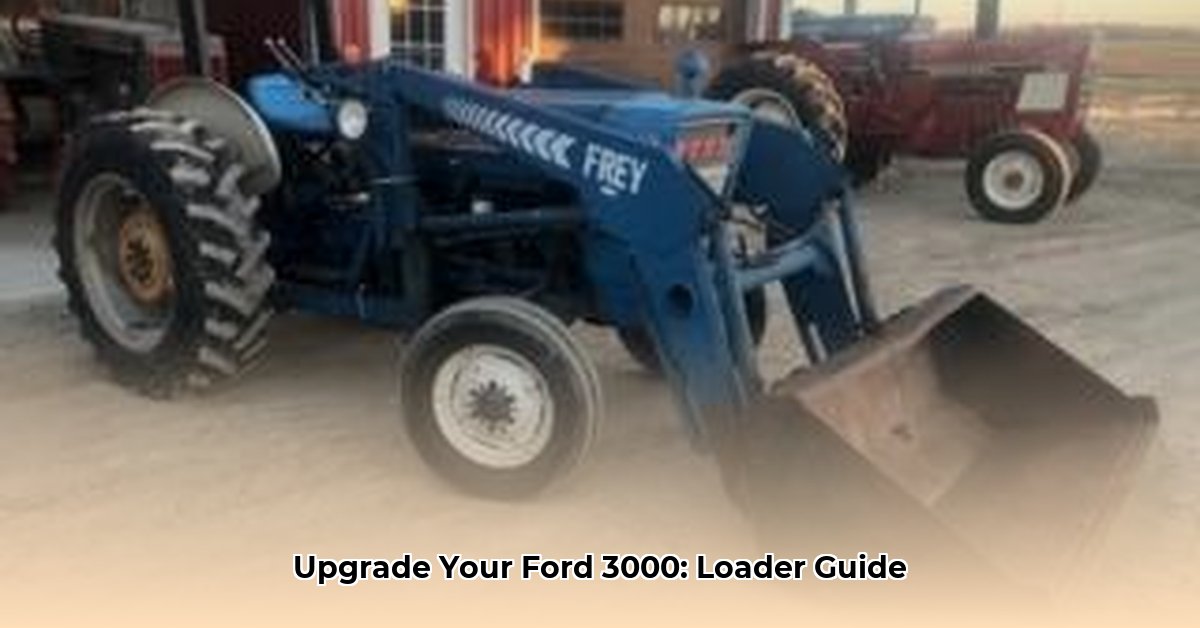
Adding a front-end loader to your Ford 3000 tractor significantly boosts its versatility, transforming it into a more efficient workhorse. However, this upgrade requires careful planning and execution. This comprehensive guide provides a step-by-step approach to selecting, installing, and maintaining a loader, ensuring a safe and successful project. For additional parts resources, check out this helpful site: Ford Tractor Parts.
Preparing Your Ford 3000 for Loader Installation
Before selecting a loader, assess your tractor's condition. A thorough inspection is crucial, focusing on the front axle, steering system, and overall structural integrity. These components will experience increased stress with a loader, so addressing any existing weaknesses prevents costly repairs later. Think of it as laying a strong foundation for a house – you wouldn't build on cracked concrete!
What percentage of Ford 3000 loader installations fail due to pre-existing tractor issues? While precise statistics are unavailable, anecdotal evidence suggests that a significant number of failures stem from neglecting pre-installation inspections.
Choosing the Right Loader for Your Ford 3000
Several loaders are compatible with the Ford 3000, each offering different features and price points. Popular choices include the Ford 772 and older Massey Ferguson models. However, compatibility isn't always straightforward. Some loaders, like a Koyker K3, may be too large, compromising stability and performance and potentially exceeding your tractor's lifting capacity. Thoroughly research loader options before purchasing. Online forums, like Yesterday's Tractors, provide invaluable insights from experienced Ford 3000 owners.
Selecting Your Loader's Hydraulic System
The loader's power source significantly impacts performance and installation complexity. Three common approaches exist:
Utilizing the Tractor's Existing Hydraulic Pump: This simplest method uses your tractor's existing hydraulic system. However, flow rates are typically limited (around 4 gallons per minute, or GPM), resulting in slower lifting speeds and reduced lifting capacity.
Installing a Crankshaft-Driven Pump: This option offers significantly higher flow rates (typically over 10 GPM), improving performance. However, installation is more complex, often requiring mechanical expertise or professional assistance.
Using a PTO-Driven Pump: This approach utilizes your tractor's power take-off (PTO), providing convenience. However, remember that using the PTO for the loader prevents simultaneous use of other PTO-driven implements (e.g., a mower or tiller).
"The choice hinges on your budget and intended workload," advises John Miller, Certified Agricultural Mechanic at Miller's Tractor Services. "Consider your typical tasks and select the system that best suits your needs."
Step-by-Step Loader Installation Guide
Installing a loader isn't a weekend project. The process involves careful mounting, potentially requiring fabrication or modification of existing brackets. Welding skills are highly beneficial. If you're unsure, professional installation is recommended to avoid damage and ensure correct functionality. This section provides a general overview; refer to your specific loader's manual for detailed instructions.
Step 1: Prepare the Mounting Points: Clean and prepare the tractor's mounting points. Ensure a secure and level surface for the loader's subframe.
Step 2: Attach the Subframe: Carefully secure the loader's subframe to the tractor using the provided hardware. Follow the manufacturer's instructions meticulously.
Step 3: Connect the Hydraulic Lines: Connect the hydraulic lines from the loader to the pump according to the schematics provided. Ensure all connections are tight and free from leaks.
Step 4: Install the Loader Arms and Bucket: Attach the loader arms and bucket to the subframe, carefully following the manufacturer's instructions. Check for proper alignment and movement.
Step 5: Test and Adjust: After installation, thoroughly test the loader's functionality; carefully lift and lower the bucket while checking hydraulic lines for leaks. Make any necessary adjustments to ensure smooth and safe operation.
Budgeting for Your Loader Project
The total cost varies greatly depending on the chosen loader, type of hydraulic system, and any required modifications. Consider these factors:
- Loader Cost: Used loaders are typically less expensive than new ones.
- Hydraulic System Cost: Existing pump usage is the cheapest; new pump installations are more costly.
- Installation Costs: Professional installation significantly increases overall cost.
- Parts and Materials: Budget for all necessary hardware, including brackets, bolts, and hydraulic fittings.
- Contingency Fund: Always allot funds for unforeseen expenses.
Reinforcing Your Ford 3000 for Enhanced Safety
Adding a loader increases stress on your tractor's frame and axle. Reinforcement is often necessary, especially on older tractors. This involves strengthening weak points to safely handle the added weight and stress. Failure to reinforce can lead to catastrophic structural failure.
How many pounds of additional stress does a typical loader exert on a Ford 3000's frame? This depends on the specific loader model and load being carried; however, it could easily add hundreds of pounds of stress.
Structural Assessment and Reinforcement Techniques
Thoroughly inspect your tractor’s chassis before proceeding. Look for signs of wear, cracks, or weakness in the front axle, frame, and mounting points. Reinforcement techniques include:
- Welding Support Plates: Adding support plates to the frame distributes the loader's stress.
- Frame Bracing: Adding bracing between the front axle and frame enhances stiffness.
- Axle Reinforcement: Address worn or damaged axles through reinforcement or replacement.
- Hydraulic System Upgrade: Increase hydraulic power if necessary to safely manage loader operations.
- Rear Weight Addition: Balance the increased front weight by adding rear weights or ballast.
Safety Considerations and Legal Requirements
Safety is paramount. Regular inspections of your tractor's structural integrity are essential. Always operate the loader within the tractor's lifting capacity; exceeding this limit is dangerous. Furthermore, consult local authorities regarding legal regulations on modifying agricultural equipment.
Conclusion
Adding a front-end loader to your Ford 3000 significantly enhances its utility. However, careful planning, thorough research, and appropriate safety measures are essential for a successful outcome. By following this guide, you can confidently transform your Ford 3000 into a more productive and versatile machine. Remember, a well-planned and properly executed installation ensures years of safe and reliable operation.